Share Insight


Idea In Brief
Senior women of colour often lead under disproportionate scrutiny and in relative isolation
Bespoke networks provide trusted spaces to exchange strategies, build relevant capabilities and gain professional and personal support.
These networks should not depend on the endurance of a committed few
Organisations must share responsibility for sustaining them, recognising the operational and emotional labour required to maintain momentum.
Collective support can reshape systems as well as individual careers.
Cross-sector and international collaboration can turn shared experience into stronger institutional practices, more representative leadership and lasting workplace change.
In today’s workplaces, the journey of senior women of colour in leadership roles reflects a complex interplay of professional growth, institutional representation, and necessary solidarity. Despite their increasing presence within organisations, such individuals often navigate uniquely challenging circumstances that impact both their professional identity and personal wellbeing. However, what has emerged in response is a distinctive form of empowerment, a network of support that fosters resilience among these leaders, and that drives wider organisational and societal progress.
A challenging landscape
For many senior women of colour, occupying director-level or executive positions presents an isolating experience. Within their respective institutions, they are often the only individuals who represent both the upper echelons of leadership and their specific demographic group. This singular presence can lead to hypervisibility, wherein their actions, statements, and decisions are scrutinised more intensely than those of their peers. As role models, their conduct can potentially ripple outward, influencing organisational perceptions. However, that responsibility also carries the weight of being an “only,” where missteps can feel exaggerated and professional development opportunities may seem less accessible or relevant to their needs.
When efforts are made to organise events, with the goal of fostering connections among women from similar roles, participation rates are often observed to be low. This sometimes stems from fears of being perceived as vulnerable within professional networks, raising concerns about reputational risk and potential impacts on how their workplace evaluates their overall positioning. Ultimately, the notion of engaging in collaborative, identity-driven spaces that focus on professional development, or emotional wellbeing creates tension for many.
A further challenge, evident across institutions and global contexts, is the disproportionate burden placed on women of colour to both initiate and sustain networks intended to address their own marginalisation. While such spaces are vital, their creation and continuity often depend on a small number of deeply committed individuals who carry the vision alongside the operational and emotional labour required to convene and maintain them. This work is frequently invisible and undervalued, unfolding within systems that have not historically recognised or supported their leadership. The responsibility of “carrying the torch” becomes cumulative - requiring sustained energy to maintain momentum, re-energise participation and continue pressing for change in environments that are slow to respond. In the absence of broader institutional ownership and shared accountability, the risk is that progress becomes contingent on individual endurance rather than systemic commitment, raising important concerns about sustainability and the wellbeing of those at the forefront of change.
The power of bespoke spaces
In response to these challenges, particularly in the higher education sector, a growing movement has been born: the creation of bespoke networks that serve senior women of colour, tailored specifically to meet their distinct professional needs and circumstances. These groups go beyond the traditional scope of leadership development programs and employee networks, offering bespoke avenues for personal and professional growth. Unlike generalised activities, these spaces consider the nuances of identity and organisational cultures that influence the professional pathways available to women of colour in leadership roles.
The foundation of these networks lies in two critical aspirations. First is fostering professional development in a meaningful and relevant way. This includes seeking out mentorship opportunities, exchanging systemic strategies, and sharing insights into navigating the unspoken dynamics of leadership roles within organisations. Second, and equally vital, is establishing emotional and professional support systems: a sanctuary where members develop connections grounded in trust, candour, and mutual encouragement. It is the blending of these two dimensions that renders such networks exceptional as they sustain their members during even the most challenging times.
As these groups evolve, they have become vibrant resources for their participants. By creating safe spaces, the networks enable members to freely engage with one another, transcending the fear of being judged or misunderstood. More significantly, they cultivate dialogue and foster ideas that are actionable within professional settings, emphasising values like collaboration, inclusion, and empowerment.
In the current global context, these bespoke spaces are taking on a heightened significance in how they are being used and experienced. As wider organisational and political environments become more tentative in their engagement with questions of diversity, inclusion and equity, these networks are increasingly acting as sites where such conversations continue to be surfaced, explored and advanced. For women of colour, they are spaces in which shared experience is translated into collective insight, where leadership is exercised relationally, and where momentum is sustained through connection and mutual reinforcement. In this sense, their value lies not only in who they bring together, but in the ways in which they enable dialogue, framing and action to continue in parallel to, and sometimes beyond, formal institutional structures.
Sector and global parallels
Much of the discourse surrounding challenges facing senior women of colour reflects broader patterns observable across workplaces globally. Women of colour represent an increasing portion of the workforce, often described as approaching the “global majority” in many regions. However, the reality of their lived experience in workspaces tells another story: representation at the highest level remains disproportionately low. While this represents an ongoing challenge, visible efforts in Australia, Canada, and other parts of the world highlight other examples of how progress is being realised.
In Canada, the journey has included establishment of leadership development opportunities that introduce executives to Indigenous communities, with the goal of cultivating cultural intelligence. Exposure to nuanced ways that communities engage in governance offers transformational opportunities for leaders to build more culturally-responsive practices. While this initiative does not map directly to the experience of women of colour in leadership, it illustrates a meaningful response to address challenges faced by groups navigating marginalisation and historical inequities.
First Nations communities and individuals in Australia form a cornerstone in local discussions on diversity, equity, and inclusion strategies and Reconciliation Action Plans across progressive corporate leadership. These voices highlight the necessity of bridging cultural understanding with structural reform. Senior women of colour find a distant, yet resonant, connection to these efforts, especially within the context of ensuring workplaces embrace diversity not merely as an operational requirement but as part of leadership evolution.
In the UK, an organisation was established in 2019 to improve representation of Black, Asian, and other ethnically diverse (BAED) Non-Executive Directors in the National Health Service (NHS) and wider health system, so that their Boards are representative and more effective in supporting the organisations, patients, and communities they serve. It has become an influential voice on NHS governance and leadership, and has created a community of aspirant and experienced BAED NEDs that are supported by resources focused on their recruitment and the retention of NED positions.
For UK networks supporting senior women of colour, drawing from these examples is indispensable. International parallels reveal shared challenges, demonstrate innovative strategies to navigate marginalisation, and inspire those engaged in similar leadership ecosystems to redefine best practices for equity.
Emerging directions
While the journey for senior women of colour in leadership positions is laced with challenges, the emergence of bespoke networks represents a powerful catalyst for progress. These groups extend beyond traditional institutional inclusivity measures, driving meaningful change in both leadership capabilities and workplace culture.
As the broader workplace landscape embraces diversity, organisations need to invest in culturally aware strategies that reflect the distinct narratives characterising the experiences of women of colour. This approach doesn’t merely create opportunities for individual success; it also enhances the overall fabric of institutional leadership, embedding diversity as a core facet of excellence.
Future initiatives might also seek new ways to globalise these efforts. Platforms enabling cross-border collaboration, can foster peer networks that transcend geographical and sector limitations, connecting leaders navigating similar realities from Australia, Canada, Africa, Asia, and Europe. By widening dialogues, these networks can build collective strength while uncovering layers of shared insights.
Recognition remains critical to fostering transformative leadership. As the global majority trend continues to grow, it is vital for organisations to commit to diversity-driven leadership models that prioritise equity and transformative change. By investing in initiatives aligned with these values and learning from grassroots models already in play, organisations can create cultures that empower all individuals to lead with resilience, authenticity, and long-term impact.
Moving forward
The development of spaces specifically tailored to senior women of colour is just the beginning. These networks encapsulate the power of collective action, an empowering way for leaders to frame progress not as a singular achievement but as shared, continual development for long-term equity and workplace transformation. Parenting a new vision for leadership in the 21st century requires innovative strategies for inclusion that lift us beyond stereotypes and into thriving, empowered organisations.
Leaders, help us forge a path forward to embrace, accelerate, and champion transformation within leadership structures, and the pipelines that precede them, across global workplaces.
Get in touch to discuss how bespoke networks can support senior women of colour and strengthen leadership.
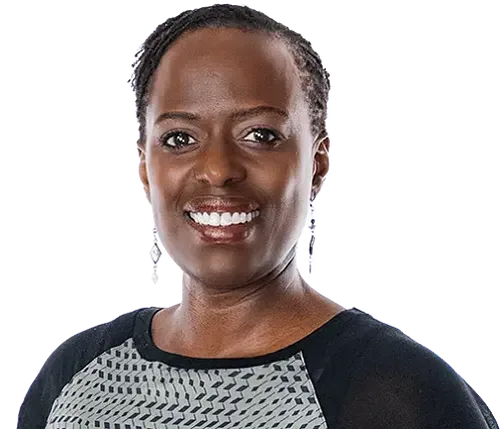
Connect with Abby Nduva and Dr Monika Nangia, Academic Registrar and Director of Student & Academic Services at Durham University, on LinkedIn.